Are you a woman in India wondering where the real job openings are in 2026? If you’re struggling to sort between government Sarkari Naukri and private‑sector roles, this page is written for you. I’ll walk you through the most relevant government and private jobs for women in 2026, what you actually need to get shortlisted, and exactly how to apply so you don’t waste time or money on the wrong notifications.
What is “Latest Jobs 2026 for Women in India”?

“Latest jobs 2026 for women in India” refers to both government and private‑sector openings that are either reserved for, or actively targeting, female candidates in 2026. In practice this means you’ll see two big buckets:
- Government jobs: posts in banks, railways, state staffing commissions, central PSUs, teaching, and police with quota or women‑only categories.
- Private jobs: roles in IT, healthcare, BFSI, e‑commerce, and startups that explicitly advertise women‑friendly policies, remote work, or “women‑focused” drives.
Women‑targeted roles are no longer just about “girl‑friendly” clerical work. In 2026, you are seeing women‑only or women‑preferring posts in banking, railways, defence‑adjacent units, and even drone‑pilot or tech‑adjacent SHG schemes. For example, the India Skills Report 2026 notes that female employability has actually surpassed male employability (54% vs 51.5%) for the first time, driven by digital‑first roles and hybrid‑work options.
Eligibility / Who This Is For
To grab the latest jobs 2026 for woimen in India, you need to match at least one of three buckets: education, age, and category. Here’s how it typically breaks down:
Education level
- Class 10 pass: Anganwadi worker, Gramin Dak Sevak (GDS), certain state‑level village‑level posts, and some municipal support roles often specify “female only” or “women encouraged.”
- Class 12 pass: Bank clerk, many police constable / home guard posts with women quota, and some PSU helper‑level vacancies.
- Graduate (any degree): Bank PO, railway non‑technical popular categories (NTPC), SSC CGL‑level posts, teaching (TGT/PGT after BEd), and many state‑level officer‑grade roles.
- Postgraduate or professional degree: Specialist‑officer banking jobs, PSU engineers, teaching with BEd/MEd, and private‑sector roles in IT or finance usually require 12th or graduate level plus specific skills.
Age and category
- Age: Most government jobs cap entry between 18–32 years for general candidates, with 5–10 years relaxation for OBC, SC/ST, and widows / ex‑servicemen daughters.
- Category:
- General: must meet age and relaxation rules strictly.
- OBC / SC / ST / EWS: extra age relaxation plus separate reservation in many women‑only or women‑preferring posts.
- Special focus:
- Many Anganwadi, SHG facilitator, and rural‑banking roles are advertised as “Mahila Workers only” or “women candidates preferred.”
- Some police and defence‑related posts (women constable, home guard, GDMO doctors) have reserved women‑only categories or separate women‑only examination batches.
If you’re asking, “Am I too late?” the answer is often no in 2026. The government has ramped up women‑centric schemes and quotas, and private‑sector hiring is also targeting women in tech, healthcare, and BFSI.
Step‑by‑Step Process / How It Works
Applying for latest jobs 2026 for women in India is simple in theory, but messy in practice. Here is a realistic, step‑by‑step workflow you can follow:
Step 1: Choose your target sector
Decide whether you want government, private, or a mix.
- For government jobs 2026 for women, track:
- SSC (Central Govt),
- RRB (Railway),
- State Staff Selection Commissions (UPSSSC, TNPSC‑type),
- PSU / Bank portals (NIC, SBI, BOB, etc.).
- For private‑sector jobs 2026, focus on:
- LinkedIn, Naukri, Apna, and company career pages (IT, BFSI, e‑commerce, healthcare).
In practice this means opening two separate tabs: one for government notifications, one for private‑sector job‑boards.
- LinkedIn, Naukri, Apna, and company career pages (IT, BFSI, e‑commerce, healthcare).
Step 2: Shortlist notified posts
When you open a job notification (PDF or web page), note:
- Post name (e.g., “Anganwadi Worker,” “Women Police Constable,” “Bank Clerk”),
- Department (Ministry of Women & Child Development, State Education Dept, PSU, Bank, etc.),
- Women quota or “women only” tag,
- Last date to apply.
If the post says “women candidates preferred” or “reserved for women,” treat it as a priority target because competition is often lower than fully open posts.
Step 3: Check genuine eligibility line‑by‑line
Most applicants skip this and regret it later. For each post, verify:
- Education (10th/12th/Graduate/Postgraduate),
- Age on the cut‑off date (not “as of today”),
- Reservation category,
- Whether you need any certificate (EWS, OBC, SC/ST, domicile, etc.).
If you’re unsure, note the helpline number or email on the notification and write a short email rather than guessing. Most people “assume” they are eligible and then get rejected at document‑verification stage.
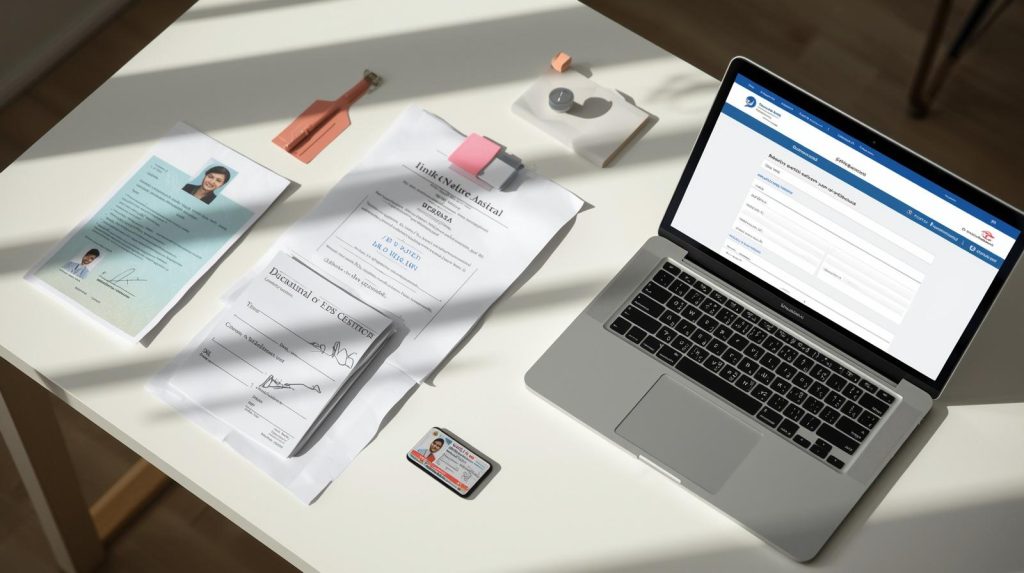
Step 4: Prepare documents and form
For government jobs 2026 for women, you’ll usually need:
- Scanned photo and signature,
- 10th/12th/degree certificates,
- Caste/EWS certificate if applicable,
- Domicile certificate (for state‑level posts),
- Photo ID (Aadhaar, PAN, etc.).
When you reach the online application form, fill carefully:
- Address: both current and permanent if asked.
- Category: general / OBC / SC / ST / EWS with exact code.
- Preferences: if you’re applying for a state‑level exam, choose districts where you can realistically appear.
Save a screenshot of the filled form and payment receipt. This is what most people overlook when their form gets “rejected due to technical error.”
Step 5: Payment and confirmation
- Most government jobs 2026 require online payment (₹100–₹800 depending on category and post).
- If you’re in the reserved category (SC/ST/ex‑servicemen, etc.), verify that the application fee is waived in that specific notification.
- After paying, download the application confirmation PDF and keep it in a separate folder on your phone and laptop.
If you’re applying for private‑sector roles, prepare:
- A single‑page CV tailored to each job,
- A cover statement (even if the form says “optional”),
- Links to your LinkedIn or portfolio if relevant.
Key Benefits / Why It Matters
Choosing latest jobs 2026 for women in India is not just about getting any job; it’s about getting the right mix of security, growth, and flexibility. Here’s what you actually gain:
Government‑sector advantages
- Job security: Central and state government jobs are among the most stable employments in India, with limited risk of sudden layoffs.
- Pension and gratuity: Many posts now fall under the New Pension Scheme (NPS) or pension‑linked schemes, giving long‑term financial safety.
- Salary and hikes: For example, bank clerks and lower‑grade state posts start around ₹12,000–₹25,000 per month, with regular DA and promotions.
- Women‑specific schemes: Anganwadi, Mahila SHG, and rural‑banking roles often include skill training, honorarium, and later formalisation into full‑time posts, which is especially useful for women from semi‑urban or rural areas.
Private‑sector advantages
- Higher growth in BFSI and IT: In 2026, BFSI and IT together are projected to generate tens of thousands of new roles, many of which explicitly target women through diversity hiring drives.
- Flexible work options: Hybrid and remote‑friendly roles are more common now, especially in digital‑marketing, customer‑success, and back‑office operations, which suits many women juggling home and office.
- Leadership pipeline: Reports show applications from women for senior management, risk, and compliance roles have jumped 40–50% year‑on‑year, meaning there’s a real push for women to move into decision‑making positions.
If you start with a secure government job and then build skills (certifications, short courses, digital‑marketing or data basics), you can transition into higher‑paying private‑sector roles later.
Common Mistakes / What to Watch Out For
Even good candidates lose out on the latest jobs 2026 for women in India because of a few, repeated mistakes.
Mistake 1: Not checking the “women only / women reserved” tag
Many women skip posts that say “women only” or “women candidates preferred,” thinking they are “too big” or “too tough.” In reality, those posts often have less competition because fewer women apply, even though they may offer the same salary and perks as open posts.
How to avoid it: Add a separate column in your master list called “women‑only / women‑quota” and mark those as “priority application.”
Mistake 2: Missing the last date or document deadline
Notifications often mention:
- “Last date to apply,”
- “Last date to submit fee,”
- “Last date for document upload or correction.”
If you miss any of these, your application may be rejected even if you filled the form correctly.
How to avoid it:
- Note the date in your phone calendar and set two reminders: one three days before and one on the day.
- Treat the last date as “the last day you can start the process,” not “the day you’ll casually finish it.”
Mistake 3: Copy‑pasting the same CV or bio for every job
For private‑sector jobs, many women upload a generic CV formatted years ago and don’t mention the role title or keywords. Hiring managers often filter CVs by role‑specific keywords (e.g., “banking operations,” “customer‑service,” “data entry,” “social‑media support”).
How to avoid it:
- Keep one master CV but create a short‑version PDF for each job,
- Add a 3–4 line “career objective” that mentions the exact job title and company type.
Mistake 4: Not clarifying category or domicile confusion
I’ve seen many women lose out on reserved posts because they filled “General” instead of “OBC” or “SC,” or selected the wrong state for domicile. Once the form is submitted, corrections are often not allowed.
How to avoid it:
- Before you start the form, write down:
- Your category,
- Exact state of domicile,
- Any certificate numbers.
Then double‑check them while typing.
Pro Tips
These are the kinds of things you don’t see in most “list‑style” job articles, but they actually move the needle.
Tip 1: Create a “job tracker” spread‑sheet
Maintain a simple table with:
- Post name,
- Department,
- Last date,
- Women‑only / women‑quota tag,
- Status (Not applied / Applied / Payment done / Exam date).
This keeps you from missing openings and helps you see which category you’re targeting most (teaching, banking, police, etc.).
Tip 2: Start small, but start now
If you’re unsure about your readiness, apply for lower‑qualification posts first (Anganwadi, GDS, assistant‑cum‑clerk‑type) even if they’re not spectacular. The experience of clearing written tests and interviews will help you much more than waiting for “the perfect” job.
Tip 3: Use free online prep, not just offline coaching
For SSC, railway, and state‑level exams, many women still rely only on local coaching. But in 2026, YouTube‑based exam‑channels, free mock tests, and PDF‑style practice sets are highly effective and much cheaper.
Tip 4: Combine government aspiration with private‑sector skills
If you want government jobs 2026 for women, focus on:
- Reasoning, maths, English, and general‑knowledge basics.
At the same time, pick one private‑sector skill (spreadsheet handling, basic digital‑marketing, customer‑service, or data entry) and practice it through free or low‑cost courses.
This way, even if a government exam doesn’t work out immediately, you have a plan‑B income stream in the private sector.
About The Author